Search This Blog

Showing posts with label 14 day clean eating challenge. Show all posts

Saturday, 18 July 2015

Day 14 - Eating Clean Mini Challenge


Day 14: No more than 5-ingredients – Avoid any and all packaged food products that contain more than five ingredients no matter what ingredients

Today's Mini Challenge is about reading the ingredients on packaging and paying attention to how many ingredients are in there!!! This week I'm going to ask you to avoid any and all packaged food products that contain more than five ingredients no matter what ingredients are listed.  Obviously it would be ideal if these ingredients adhered to the other mini challenges we have already completed.   

Here is Michael Pollan's take on this rule:

“Avoid food products that contain more than five ingredients. The specific number you adopt is arbitrary, but the more ingredients in a packaged food, the more highly processed it probably is. Note 1: A long list of ingredients in a recipe is not the same thing; that’s fine. Note 2: Some products now boast, somewhat deceptively, about their short ingredient lists. Häagen-Dazs has a new line of ice creamed called ‘five.’ Great–but it’s still ice cream. Same goes for the three-ingredient Tostitos corn chips advertised by Frito-Lay–okay, but they’re still corn chips.”

Try to find products where the ingredients are all real food and have a max of 5 listed!  It's a challenge but I know you can do it!!  These last two weeks have prepared you for this!

The main goal of this rule is to get people to start reading and scrutinizing the ingredient labels on their food.

To give you a leg up here is a list of groceries that typically have less than 5 ingredients listed: 
  • All fruits, vegetables, local meat/animal products, and wild-caught seafood
  • Dried fruit, nuts and seeds
  • Popcorn
  • Carrot Raisin Manna Bread (Freezer Section)
  • Lara bars
  • Triscuits
  • Fruit leathers
  • Applesauce
  • Whole-wheat Matzo crackers
  • Brown rice crackers and cakes
  • Oats
  • Cheese
  • Brown rice
  • Whole-wheat pasta
  • Olives
  • Beans
  • Peanut butter
  • Puffed whole-grain corn cereal
  • Shredded wheat cereal
  • 100% pure maple syrup and honey
Share your 5 Ingredient or less finds with us in the Eating Clean Mini Challenge Event on Facebook! 

Monday, 13 July 2015

Day 9 - 14 Days of Eating Clean Mini Challenge


Day 9: No refined sweeteners – No refined or artificial sweeteners including (but not limited to): white sugar, brown sugar, raw sugar, sucanat, splenda, stevia, agave, corn syrup, high-fructose corn syrup, brown rice syrup, and cane juice. Foods and beverages can only be sweetened with a moderate amount of honey or maple syrup.

When I started reading ingredients lists instead of the nutritional facts tables on the back of processed foods I soon realized that sugar is in EVERYTHING!!!  
It's actually quite scary to think that even a savoury cracker needs to have sugar in it. Strange right.  But it's true, the most unusual things seem to NEED sugar in them to make them appetizing.  So it is time to put our foot down and live one day of our lives without any refined sugar. Can you do it?
I get so many questions about sweeteners especially from those wondering why we’ve chosen honey and maple syrup as our sweeteners of choice. I've had people say to me, Sugar is Sugar is Sugar it doesn't matter if it's white sugar or honey it's still sugar. But I want to put the record straight and tell you it's just not that simple. Sure whether it is white table sugar, raw sugar, high-fructose corn syrup, or maple syrup they are all – for the most part – sugars. BUT I have selected honey and maple syrup as my sweeteners of choice because they are two of the least processed “sugars” out there, and they are also difficult to find in highly processed foods. Honey and maple syrup also have slightly more nutrients than highly refined sweeteners like white table sugar, although – once again – all sweeteners are similar in the fact that overall they are high in calories and low in nutrients. And you tend to need less honey or maple syrup to sweeten something than you do other refined sugars.

In my research I've learned that the fibre in Honey breaks down differently than other sugars and releases into the blood stream slower meaning the the Glycemic Index is lower in Honey (GI 55) than it is in white sugar (GI 68). In comparison 1 Cup of Oatmeal has a Glycemic Index (GI) of 58 compared to 1 TBSP of Honey with a GI of 55 or 1 TBSP of Sugar with a GI of 68.  You can check out this neat little chart on Glycemic Loads of common foods for more info.

The Science of it: In sugar, the fructose and glucose molecules are bound together chemically into a molecule called sucrose. In honey, the fructose and glucose molecules are floating around separately. Fructose is sweeter than glucose and sucrose. In honey, there is slightly more fructose than glucose. That’s why honey is a bit sweeter than sugar. So despite a higher calorie count, you need less to feel the same amount of sweetness.

Ok so as I type all this Nutrition Science mumbo jumbo and try to explain WHY honey or maple syrup are my choices lets go back to the root of all this. And let me explain it simply in my terms of general understanding of how I see food NOW.  

Food should be:  Simple. Unprocessed.  Not made in a lab.  My great grandmother should be able to recognize and know what it is.  

Food should not be:  Full of ingredients I can't pronounce.  Processed in a way I can't re-create in my own kitchen.  Stripped of nutritional content for the purposes of shelf live.  

For those reasons alone I can tell you that Local Honey and Canadian or BC maple syrup that are as unprocessed as possible are to me the easy answer.  
When I started eating what I called "Real Food" we ended up having to make a lot of the "sweetened" foods we wanted ourselves. It was very difficult to find any store-bought “sweet treats” that followed all of our rules – and trust me I looked! Now I do find more and more items that are sweetened with honey but you do have to be careful to check the whole ingredients list and not just read the label saying sweetened with honey because that's where the full story is.  You can learn more about the different types of Sugar's and artificial sugars that can be listed on ingredients lists on my blog post Sugar, Sugar, Sugar.

Since this sweetener restriction forces you to make sweetened foods from scratch you can see and control how much sweetener is being added. And chances are you will use a lot less sweetener than a factory.

You can find LOTS of yummy recipes here on the blog that incorporate only honey or maple sugar as the sweetner!

Check out my Healthy Recipe Round Up Page here!
In closing, there are two key takeaways when it comes to sweeteners. Never choose an imitation sweetener (like splenda) over the real thing and no matter what sweetener you choose always consume it in moderation. I hope that restricting you to honey and maple syrup today and for the rest of your mini challenges, will help you accomplish both of those things!

Sunday, 12 July 2015

Day 8 - Eating Clean Mini Challenge


Today's Clean Eating Mini Challenge is all about 100% Whole grain – All grains consumed must be 100% whole-grain today and for the rest of this challenge (and hopefully from now on).

Whole grains can be one of the most confusing and hard-to-find food products in the supermarket. From misleading buzz words like “multi-grain” and “wheat” to health-claims on the front of food packages that aren’t backed up by the ingredient list, it sure is treacherous out there.


For the most part all grains (wheat, corn, barley, rice, etc.) consist of 3 parts: the bran, germ and endosperm. The bran and especially the germ are where you’ll find most of the grain’s nutritional value. When a grain is highly refined into a product like white flour or white rice both of the most nutritional parts are removed leaving you with only the endosperm. The endosperm is basically a “big packet of starch and protein” that is high in calories and low in nutrients (similar to sugar).

In order to make up for the lost nutrients they have stripped away from the grain, refined grains are often "enriched" or "fortified" with vitamins thought to be lost. Wouldn't you rather just eat them in the first place?

Did you know that one of the main reasons products like white flour were manufactured is because when the key nutrients are stripped away, the flour ends up having a much longer shelf life and is less interesting to bugs since they are looking for nutrients and don't have much interest in refined grains.....

So here is where to start:

** If the front of a food package says it contains “whole-grains” or “whole-wheat” don’t be fooled…always verify by reading the ingredient label to see what a product is really made of. Packages often advertise that a product contains whole-grains even if it is only 20% whole-grain.

**If a product is labeled as “multi-grain” it by no means guarantees those grains are whole-grains. It could be a bunch of different refined grains mixed together. Again, you must read the ingredient list to know for sure what’s in a food product.

**If the ingredient list on a product contains any portion of “wheat” or “rice” then it is not 100% whole-grain. White flour is still technically made from the wheat plant (a refined version) so it is often labeled as “wheat.” It must say something like “whole-wheat” or “brown rice” to be a whole grain ingredient.

**Whether you are shopping at a supermarket or eating at a restaurant, most food products that are labeled as whole-grain are rarely 100% whole-grain. They often contain some percentage of refined grains as well.

**Since it is so hard to find 100% whole-grain foods it is best to avoid grains all together when you are out to eat at a restaurant (unless you can see the ingredient list yourself). Servers and other restaurant employees are often misinformed and will tell you the bread is “100% whole grain” when it is not.

**Finding good 100% whole-wheat sandwich bread is one of the biggest whole-grain challenges of them all. Some stores bring in freshly made bread products from a local bakery. Other stores have a few decent options in their freezer section. Your best bet is to find a local bakery that makes their dough fresh daily (unlike grocery store bakeries that typically bake pre-mixed dough) or make it yourself!

I did a blog series last year on 5 Breads that passed my test at the grocery store and how they tasted, check it out here if you are looking for a place to start today!


Friday, 10 July 2015

Day 6 - Eating Clean Mini Challenges


Day 6 Eating Clean mini Challenge:  Try two new whole foods that you have never had before!

Whole foods are considered a food item which only has one ingredient and is not processed or refined.  For example:  Peach, Potato, brown rice, broccoli these are all whole foods. 

Here are some whole foods which is less common to give you some ideas:


  • Quinoa (pronounced “KEEN-wah”)
  • Barley
  • Parsnips
  • Kale
  • Collard greens
  • Steel cut oats
  • Papaya
  • Brussel sprouts
  • Black-eyed peas
  • Chickpeas
  • Bok choy
  • Swiss chard
  • Radicchio (pronounced “rah-DEE-kee-oh”)
  • Spaghetti Squash
  • Watercress
  • Dates
  • Kiwi
  • Eggplant
  • Pomegranate (and having the juice in a martini does not count!)
  • Fava beans
  • Lentils
  • Spelt
  • Pinenuts
  • Star fruit
  • Dragon Fruit
  • Blood oranges
  • Jimica
I haven't even tried all of these and this is certainly not a complete list but I challenge each of you to try two new whole foods that you have never tried before and post which you have tried either here in the comments or in the Eating Clean Mini Challenge Event page on Facebook!

Thursday, 9 July 2015

Day 5 - Eating Clean Mini Challenge


Day  5 Eating Clean Mini Challenge:  No fast food or any foods that have been deep-fried in oil.

The problem with something being deep-fried is that the food absorbs a great deal of oil during the cooking process. So when you eat the end product you are consuming far more oil – an unhealthy fat in most cases – than is recommended. Most fast foods are made with unhealthy fats like canola oil and other Hydrogenated Oils.
For this challenge you need to avoid:
  • Restaurants with drive-thru windows
  • Convenience stores that also typically sell gas
  • Places where you watch them assemble your food through a glass wall
  • Restaurants that are situated in a “food court” setting
  • Airplane food
The places where you can eat during this challenge:
  • Restaurants with waiter service (which aren’t always ideal when it comes to food quality, but we just had to draw the line somewhere)
  • Grocery stores (try a greek salad from the deli, or brown rice sushi)
  • Your own kitchen!
  • Friends’ houses
Even while you are eating at the “allowed” places you must still of course avoid deep-fried foods, which is trickier than it sounds. If it is crunchy and crispy you might want to question it. 
Some other examples of foods to be on the lookout for:
  • French fries
  • Sweet potato fries
  • Potato/tortilla chips
  • Chicken fingers
  • Chicken wings
  • Donuts
  • Corn dogs
  • Egg rolls


The goal of this challenge is to force you to figure out alternatives to a Big Mac even when you are starving and on the go. And the key to success is planning ahead. Don’t wait until the last minute to figure out where and when you will have your next meal. Consider packing some whole food snacks to hold you over including bananas, apples, oranges, nuts, popcorn (with minimal oil/salt), dried fruit, store-bought Lara Bars, whole-grain crackers, cheese, fruit or veggie baggies etc. Also take the time to pack lunches for work, school, long car rides, and after a sporting event etc.
A few weeks ago I packed a quick picnic lunch to take down to the beach after Asher's lacrosse game.  It was nothing fancy, just some tuna sandwiches, carrots, water and grapes.  Super simple using what we had on hand, but it ensured that we wouldn't be tempted by the mcdonalds perfectly situated on the way to and from the the Local Recreation Centre!  I know it can be huge temptation especially when kids activities start around 5 or 6pm, and it can be difficult to feed everyone before or after with enough time before bed.  But I've been trying to plan ahead and either make a meal that can be quickly heated when we all get home, a crock pot dinner or pack something for afterwards!  
It's all about the planning ahead!  

I pack my lunch for work every day unless there is a special lunch planned, but I don't often pack just a boring old sandwich.  You will find me baking a salmon filet in the toaster oven at work or even a healthy pita pizza.  But it's all about planning the night before and putting it all together so that my lunch isn't boring!

I often post my lunches on my Facebook page and you can find them here


Tuesday, 7 July 2015

Day 3 - Eating Clean Mini Challenge


Day 3 Eating Clean Mini Challenge: Meat and Eggs – All meat consumed this today will be locally raised (within 100-miles of your hometown). Seafood should be caught wild if possible. 


I want to take a few moments to explain the reasoning behind this one. And just to make sure there is no confusion we are defining meat as beef, turkey, chicken, pork, lamb, venison, duck, etc.  There is no restriction on other animal products (like milk and cheese) but Eggs should be easy enough to get locally but if not try for organic or at least free range for the rest of the week. For Seafood, if I'm buying salmon I do like to get wild salmon as it tends to be fresher and they aren't fed pellets but rather eat what they are meant to in nature. Check out David Suzuki's Top 10 Sustainable Seafood guide!
Local Meat: Of course it's always nice to support local business but also just about anything you can buy through your local farmers will be better for you and the environment. Not only do fruits and vegetables lose nutritional value during their trek, but the by-products from all of that travel also have a very negative impact on our environment. When it comes to industrialized meat, not only does the travel aspect take a toll on our environment, but the resources used to raise, feed, and slaughter the animals do as well. Secondly, the only way to truly know if the meat you are eating was humanely raised is to ask the farmer yourself. Factory farms treat animals like commodities, and they are kept in tightly confined pens and often never move more than a few feet their whole lives.  And even if the meat comes from an organic factory farm it doesn’t necessarily mean they were raised or fed properly. And the health of the animal directly affects the nutritional value of the food you consume. If you aren't sure where you can find locally raised meat today, post in our facebook event to see if anyone there can help or do a quick google search!  But if you can't, just go vegetarian for the day!
I'm lucky in that my sister lives on her husbands family farm which raises cows and now pigs as well.  The cows are fed fresh grass and hay grown on the farm and are treated very well.  There is one cow that my brother-in-law is very fond of (though he wont name him), the cow loves his head to be scratched and is so friendly.  It's sad knowing that he will one day be taken away to be slaughtered but at least these cows are living a good happy life and fed well.  
Here are a few reason why not to eat Farmed Salmon!
  • Wild salmon are more nutritious than farmed with eight times more Vitamin D and three times more Vitamin A per 100 gram serving.
  • Wild salmon range in colour from pink to red because of the food they eat. Since farmed salmon do not benefit from a wild diet, natural and artificial colourants are added to their feed to alter their flesh from an unappealing grey to a marketable “salmon” colour.
The way to look at it is; if your food eats it you are eating it.  So feeding cows and chickens GMO feed is just like you eating Genetically modified foods too. I think we all know how food effects us when we have eaten something greasy etc.  We don't feel well afterwards.  When the animals are left to feed on natural foods in their environment we are getting the same nutrients they are. This is how nature intended it! Plus if you have ever eaten locally and humanely raised meat you will know the difference, the colour, taste everything is better!  

Monday, 6 July 2015

Day 2 - Eating Clean Mini Challenge


Day 2: “Real” beverages – Beverages will be limited to coffee, tea, water, and milk (only naturally sweetened with a little honey or 100% pure maple syrup). One cup of juice will be allowed throughout a week and for the duration of the challenge, and wine will be allowed in moderation (an average of one drink per day).


As you can see this means no Splenda (or sugar) in your coffee and tea and it also means no soda pop or diet soda. Can you (and your family) do it for the duration of the challenges? Each day it will be up to you to decide if you want to take the challenge for one day, the rest of the week, or the rest of the challenge and this is definitely one of those pledges where I encourage everyone to do for the rest of the challenge! The lessons learned will be much more valuable if you do this for more than a day. Here is the reasoning behind this particular Challenge.
Sweetener Choices: The moral of the story is that all sweeteners (sugar, honey, maple syrup, raw sugar, brown sugar, etc.) are high in calories and low in nutrients. The artificial sweeteners that have no calories are just chemically created imitations invented in a lab somewhere…how’s that for appetizing? So no matter what kind of sweetener one uses I hope that it is, first of all, not an imitation and second of all, used in moderation. For todays mini Challenge I ask that you stick to honey and/or 100% pure maple syrup for your beverages for two reasons…

    1. They are both (mostly) made in nature and slightly higher in nutrients than other sweeteners like refined white sugar.
    2. It is hard to find highly processed foods or beverages that have been sweetened with honey or maple syrup, and if you sweeten items yourself chances are you will put in a lot less than the factory. In my opinion, sugar is way overdone in our society (seriously it's in everything!!!) so while you can still have sugar in your food during todays challenge, I hope you can commit to at least keeping it out of your beverages (baby steps!).
    Please note: Honey and pure maple syrup are more concentrated sweeteners than white sugar so you can use a little less.
    Juice Restriction: Just like the sweeteners mentioned above natural fruit juice contains a concentrated amount of (natural) sugars, which again should be used in moderation. And while 100% natural fruit juice offers a great deal of nutrients and is highly recommended over a soda, it is not nearly as nutritious as eating the natural, raw, whole fruit itself. There is certainly nothing “wrong” with drinking fruit juice (as long as it is 100% real fruit juice and preferably organic), but I believe it is best used in moderation. Try displacing some cups of juice with something else like water, which most of us can never seem to get enough of. Plus drinking less juice and pop can help you reduce your overall calorie consumption and there is a good chance you could lose some weight too!  Bonus!
    Moderate Wine Consumption: In his book Michael Pollan suggests, “Have a glass of wine with dinner,”  But some nights one glass can turn into two (or more…), so  try to make sure your consumption averages out to one glass a day. But Pollan does go on to say, “Drinking a little every day is better than drinking a lot on the weekends.” He also says “alcohol of any kind appears to reduce the risk of heart disease, but the polyphenols in red wine appear to have unique protective qualities.” So let’s take to heart Pollan’s research showing “abundant scientific evidence for the health benefits of alcohol” and not be afraid to enjoy a glass of red wine (in moderation!) with dinner this week.
    Here are some beverage alternatives to consider during this pledge since most people like to cure one addiction with another…
    • Try a naturally sweetened mocha or coffee
    • Make flavoured water using, lemon, mint, raspberries, cucumber or a combination to add flavor to your water. 
    • Eat a few juicy grapes or oranges to help quench your thirst with something naturally sweet
    • Try offering your kids some naturally sweetened cold or hot chocolate milk
    • Mix a half a cup of juice with some water to help stretch your juice consumption throughout the week
    • Or just put a splash of juice in your water to add some flavor and make it last the whole week (grapefruit juice is great for this!)
    • Check out the recipes at the bottom of this post for Refreshing your water!
    If you are addicted to Pop just think how much money you will save if you give it up since water (a far superior alternative) is free! My husband used to love pop and we would purchase a flat of it from the Superstore every few weeks!  Once we started eating only Real food we gave up pop completely and we only occasionally get a natural ginger ale from phillips brewing company!  Last summer while camping he wanted a rye and coke to drink in the evenings, so he asked me to pick up a bottle of coca cola... well I hadn't purchased POP in so long that it felt so strange.  I was almost embarrassed walking it up to the til and paying for it.  He didn't end up using the whole thing and came home with two full bottles of it. On his own he dumped the rest of it out when we got back!  I was floored but proud!

    Join our Eating Clean Mini Challenge Event on Facebook and let us know how you plan to commit to today's challenge!  Are you committing to drinking clean beverages just for today or will you do it all week or for the rest of the challenge?


    5 Refreshing Recipes to Flavor Your Water

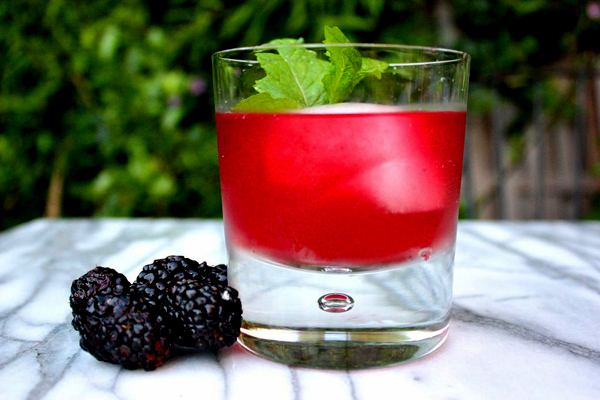
    Blackberry Mojito Water

    Ingredients:
    1 cup ice
    ½ cup fresh blackberries
    3 slices fresh lime
    4 fresh mint leaves
    1¼ cups cold water
    Preparation:
    1. Place ice in a tall glass. Set aside.
    2. Combine blackberries, lime, and mint in a large cocktail shaker. Mash well with back of a wooden spoon or muddler.
    3. Add water; cover and shake.
    4. Strain into ice-filled glass and enjoy.

    Orange Vanilla-Cinnamon Water

    Calories: 3
    Ingredients:
    1 cup ice
    3 slices fresh orange
    ¼ tsp. pure vanilla extract
    1 cinnamon stick, broken into pieces
    1¼ cup cold water

    Preparation:
    1. Place ice in tall glass; set aside.
    2. Combine orange, vanilla, and cinnamon stick in large cocktail shaker. Mash well with back of a wooden spoon or muddler.
    3. Stir in water; cover and shake.
    4. Strain into ice-filled glass and enjoy.

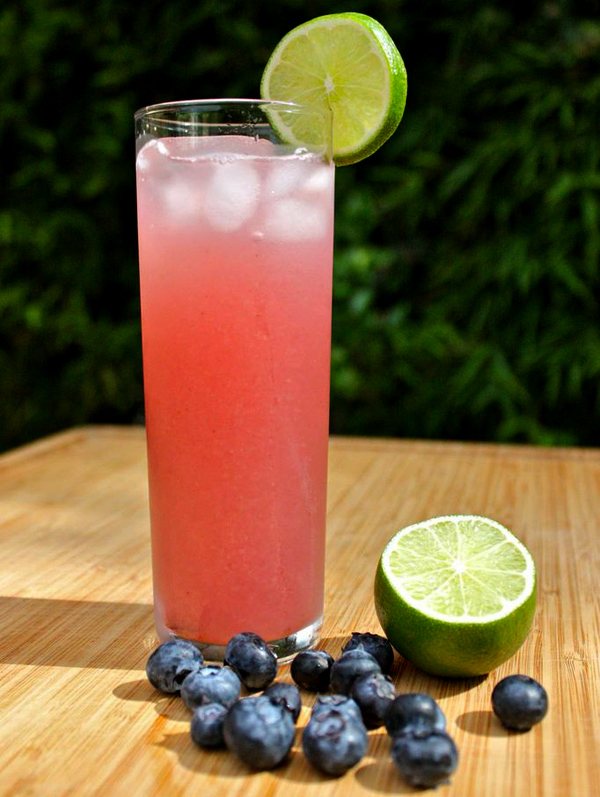
    Blueberry Vanilla-Lime

    Calories: 5
    Ingredients:
    1 cup ice
    ½ cup blueberries
    3 slices fresh lime
    ¼ tsp. pure vanilla extract
    1¼ cup cold water
    Preparation:
    1. Place ice in tall glass; set aside.
    2. Combine blueberries, lime, and vanilla in large cocktail shaker. Mash well with back of a wooden spoon or muddler.
    3. Stir in water; cover and shake.
    4. Strain into ice-filled glass and enjoy.

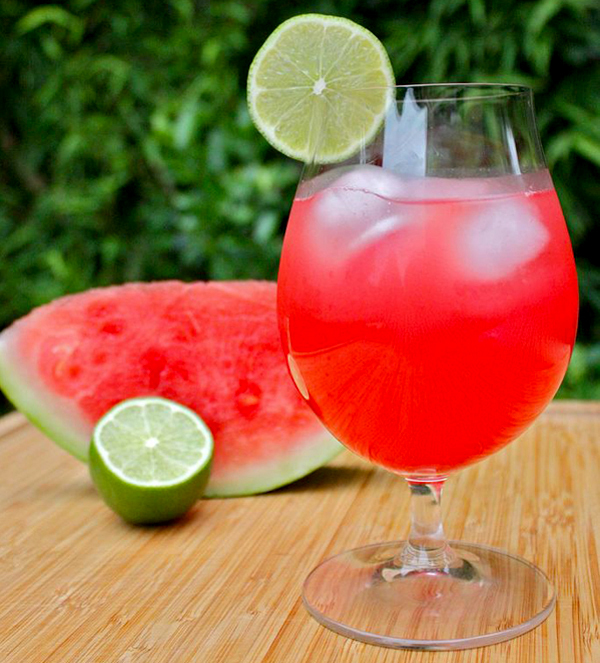
    Minty Watermelon-Lime Water

    Calories: 6
    Ingredients:
    1 cup ice
    ½ cup diced watermelon
    3 slices fresh lime
    4 fresh mint leaves
    1¼ cup cold water
    Preparation:
    1. Place ice in tall glass; set aside.
    2. Combine watermelon, lime, and mint in large cocktail shaker. Mash well with back of a wooden spoon or muddler.
    3. Stir in water; cover and shake.
    4. Strain into ice-filled glass and enjoy.

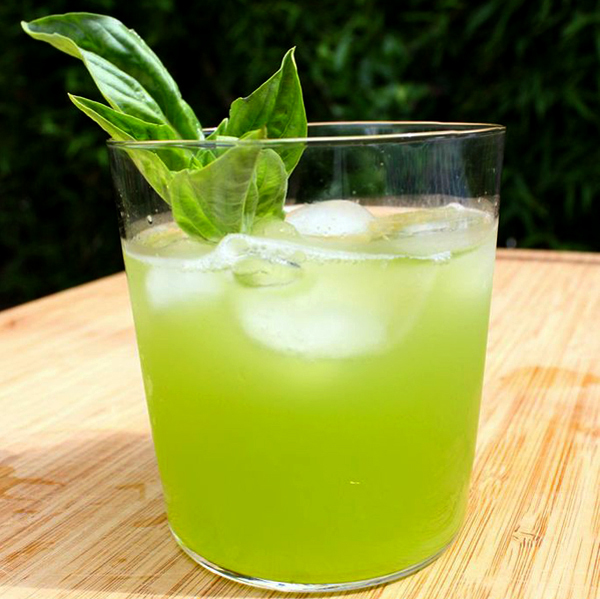
    Honeydew-Basil Water

    Calories: 8
    Ingredients:
    1 cup ice
    ½ cup diced honeydew melon
    4 fresh basil leaves
    1¼ cup cold water
    Preparation:
    1. Place ice in tall glass; set aside.
    2. Combine honeydew melon and basil large cocktail shaker. Mash well with back of a wooden spoon or muddler.
    3. Stir in water; cover and shake.
    4. Strain into ice-filled glass and enjoy.

    Sunday, 5 July 2015

    Day 1 - Eating Clean Mini Challenge


    Here we go! 

    Day 1 of our Eating Clean Mini Challenges! The group participants are busy introducing them selves and getting started on the Challenge!  


    Here is Today's Mini Challenge:

    Day 1: Eat a minimum of two different fruits or vegetables (preferably organic) with every breakfast, lunch, and dinner meal.

    Even for our family eating two fruits or vegetables at every meal is a challenge. We usually eat at least one serving per meal but two is more of a stretch for us. At dinner time I try to get two on the plate, but the other meals are lacking for sure! So I'm excited to take part in this challenge along side everyone and see how we all do!


    There are many people who don't eat any vegetables at dinner time, never mind the other meals. I get it, easy to have a BBQ burger with fries right. But try adding a salad instead or even a veggie tray to the mix.

    I would really like you to try for organic produce during our 2 weeks together, this is because there are more nutrients in organic, as the soil has more nutrients in it, additionally you won't be adding the extra chemical pesticides and fertilizers that are used on conventional produce. Plus it just tastes better (carrots are sweeter, peppers too!)

    The whole point of this challenge is for you to displace something else that you would normally eat (like chips or fries or even crackers) with some colorful produce. So for those that are worried about the extra expense of organic fruits and vegetables try buying more produce INSTEAD of something else that you would normally buy. And also consider buying frozen organic produce, which is a wonderful alternative to fresh and usually much cheaper (although it is unfortunately not always as tasty). You can find lots of fresh organic produce this time of year at Costco and frozen produce there all year around too! Or check out your Farmers Market!

    Take a photo of your yummy produce today and share it in our 14 Days of Eating Clean Mini Challenge Event!  We would love to hear where you found your organic fruit and veg!

    What doesn't count as Fruit for this Challenge:
    Dried fruit (like raisins)
    Fruit juice

    This challenge is great for involving the whole family especially the kids! If you tell them that we are all supposed to eat two fruits or veggies at each meal they will probably remind you and and hold you accountable too!  I know Asher will hold us accountable for sure!

    If you want to participate in our Facebook Event to help keep you motivated and accountable to these mini challenges Click here and hit "Going" on the event to get the daily updates, post your own photos and share your success with us!

    Each Day will be a new mini challenge, and each day the participants will gain more knowledge about clean eating and eating locally!  I'm so excited for this challenge and I hope you are too!

    Find me on Social